


Photobook Printing
Photobook Binding Types Explained: Lay Flat vs Hardcover vs Softcover vs Wire Bound
•
11 min read
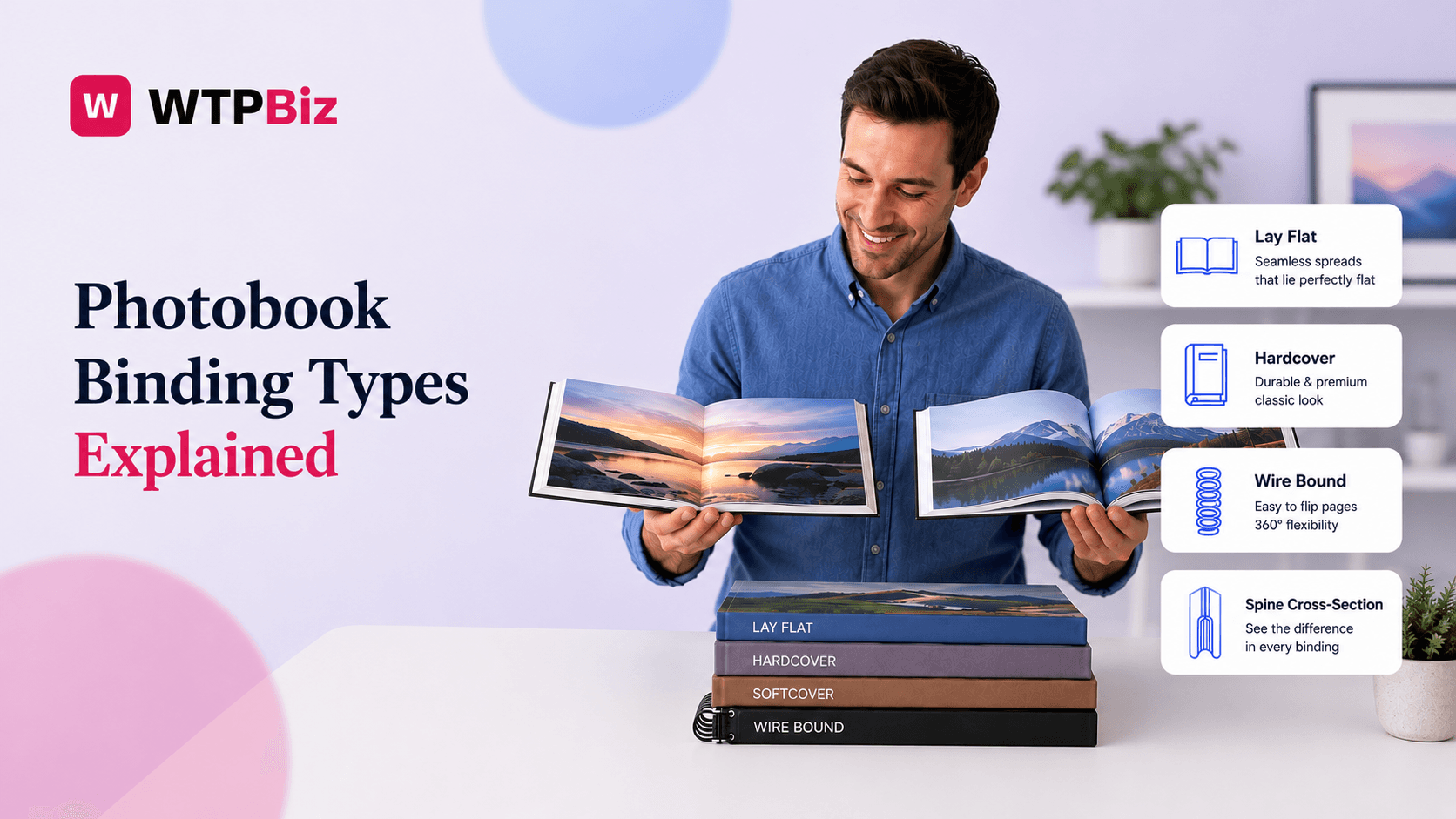
Binding is usually the last thing anyone thinks about when planning a photobook. Most people focus on image quality, paper finish, and cover design first. But the binding type directly affects how a finished book looks, how much it costs to produce, and how a client perceives its value the moment they hold it in their hands.
Lay flat photobook binding is a premium binding method that allows a photobook to open completely flat at 180 degrees, creating a seamless double-page spread with no visible gutter or image loss at the center crease.
Most guides stop at hardcover versus softcover. This post breaks down all four major photobook binding types, lay flat, hardcover, softcover (perfect bound), and wire-O or spiral bound, so you can make the right call for your product, your print shop, or your clients.
Why Your Binding Choice Affects More Than You Think
The binding you choose changes how a client judges quality before they even flip to the first page. The feel of the cover, how the pages open, and whether images get cut off at the center all register within seconds of picking up the book.
What Clients Actually Notice
For print shops, the binding type you offer also sets your price range. A lay flat album printing product commands a higher price point than a standard softcover. If your goal is to move upmarket, binding is a core part of that decision, not an afterthought.
The Gutter Problem
With standard bindings, images that run across two pages often lose detail in the center fold, known as the gutter. That lost space matters most in photo-heavy work where panoramic shots or group photos span the full spread. Check out this photobook sizing guide before you start comparing formats.
Lay Flat Photobook Binding: The Premium Standard
This is what most professional photographers and high-end print shops default to when quality is the priority. With lay flat photobook binding, each spread is printed as one continuous image across two pages. The pages are mounted back-to-back using a hinge or adhesive system, which allows the book to open completely flat at 180 degrees without any tension pulling the pages inward.
How It Works
There are two variations worth knowing. Seamless lay flat opens with no visible break across the center. Hinged lay flat uses a thin plastic hinge in the gutter, which is more affordable but leaves a faint line at the center of the spread. If your clients care about image presentation, seamless is the better option.
Lay Flat vs. Flush Mount Album
This trips up a lot of buyers. A flush mount album is a specific type of lay flat product where photographic prints are mounted onto a thick, rigid board core. The pages are heavy, firm, and built to last decades, and they're priced as heirloom-grade products.
A lay flat photobook uses specialty hinged paper that's lighter and more flexible. It holds more pages and costs less to produce. Both open completely flat, that's what they share. But keep this straight: all flush mount albums are lay flat, but not every lay flat book is a flush mount album. The construction and printing methods differ.
Pros: No image loss in the gutter, full panoramic spreads with no interruption, stays open on its own without holding the pages down, and strong perceived value for clients.
Cons: Higher production cost than other binding types, heavier than softcover options, and page count is typically limited to 20 to 120 pages depending on the method.
Best for: Wedding albums, professional photographer portfolios, travel photobooks, and fine art print collections.
Price range: A premium product, typically 30 to 60% more than a comparable standard hardcover book, depending on page count and construction method.
Key WTPBiz Insight: If your clients order photobooks for weddings, portraits, or fine art, lay flat photobook binding is the one format where the quality difference is visible the moment the book is opened.
Hardcover Case Binding: The Reliable Classic
Hardcover case bound books are the most recognized format in photobook printing. Pages are grouped into sections called signatures, then glued or sewn together and attached to a rigid board cover. The cover can be finished in cloth, faux leather, printed image wrap, or genuine leather depending on the product tier. The spine is visible and can display text, which makes it easy to identify on a shelf. Some trade contexts call this a library bound album.
How the Pages and Cover Come Together
The rigid cover is made separately and then attached to the bound page block using endpapers. This is what gives hardcover books their durability and solid feel, and it's a well-established production method used across both trade publishing and professional photobook printing.
Hardcover vs. Softcover Photobook
The core difference between a hardcover vs softcover photobook comes down to durability and price. A hardcover holds its shape over time, looks more substantial on a shelf, and suits gifting or long-term storage better. A softcover costs less and is lighter, but it doesn't carry the same perceived value. If your clients are ordering something they plan to keep and display, hardcover is the stronger choice.
Pros: Durable and long-lasting, the spine can display title text, well suited for gifting and retail, and offers a wide page count range.
Cons: Pages don't open fully flat, there's a noticeable gutter curve, it can be heavier than a softcover, and production time runs slightly longer.
Best for: Family photo archives, baby books, graduation albums, coffee table books, and retail gift products.
Price range: Mid to premium. It costs more than softcover but less than lay flat, making it a strong anchor product for most print shops.
Softcover Perfect Bound Photobook: The Practical Choice
Not every photobook project needs a premium binding. Sometimes the goal is a clean, professional-looking book at a price point that works for high-volume orders or casual use. That's where the perfect bound photobook fits in.
How It Works
Pages are stacked in order and glued along the spine edge using a flexible PUR or EVA adhesive. The cover is made from heavier cardstock and scored near the spine so it opens without cracking. The result is a squared, flat spine clean enough to display text if needed, essentially a standard paperback-style book.
Pros: The most affordable binding type of the four, lightweight and easy to mail or ship in bulk, fast production turnaround, handles high page counts well (typically 28 to 600 pages), and looks professional for non-heirloom use cases.
Cons: The spine can crack over time with frequent use, pages don't open flat so panoramic spreads lose image detail in the gutter, and it's not the right choice for wedding albums or any product where perceived value matters.
Best for: Event recap books, school yearbooks, casual holiday albums, photographer proofing books, client sample books, and any high-volume print run where cost control matters.
Price range: Budget to mid tier. It gives the best value per page when printing in larger quantities, which matters if your business needs to produce a lot of books without driving up costs.
Learn how to start a photobook printing business in 2026 if you're weighing which binding types to stock first.
Wire-O / Spiral Bound Photo Book
This is one of the more functional binding options available, and it earns its place in the right context. A spiral bound photo book uses either a double-loop wire (Wire-O) or a continuous plastic coil threaded through holes punched along the spine edge. Both let pages rotate a full 360 degrees, so the book can lie completely flat or fold back on itself.
Wire-O vs. Spiral
Wire-O has a cleaner, more structured finish and holds its shape better over time. A spiral coil is slightly more affordable but can loosen or pull out with heavy use. If you're offering this as a professional product, Wire-O is the better choice.
Pros: Opens completely flat with no gutter issues, pages rotate in any direction, practical for desk display or reference use, and budget-friendly production cost.
Cons: The wire or coil is visible at the spine and interrupts any image design that crosses two pages, it's not suitable for full-bleed panoramic spreads, perceived value is lower (this isn't a gifting or heirloom product), and the wire can bend if handled roughly.
Best for: Photographer pricing guides, studio lookbooks, event planner sample books, portfolio leave-behinds, and calendar-style photobooks.
Price range: Budget to mid tier. It's efficient for functional print products where usability matters more than presentation.
Photobook Binding Comparison Table
Here's how all four photobook binding types stack up side by side across eight key criteria, so you can compare formats without flipping back and forth between sections.
Criteria | Lay Flat | Hardcover | Softcover (Perfect Bound) | Wire-O / Spiral |
Opens flat | Yes, 180 degrees | No | No | Yes, 360 degrees |
Panoramic spreads | Seamless, no loss | Partial image loss | Significant image loss | Not suitable |
Page count range | 20 to 120 pages | 20 to 400+ pages | 28 to 600+ pages | 24 to 200 pages |
Durability | Excellent | Very good | Average | Average |
Perceived value | Premium | High | Standard | Functional |
Best for | Weddings, portfolios | Family archives, gifts | Events, proofs, samples | Lookbooks, display use |
Spine text | Yes | Yes | Yes | No |
Relative cost | Highest | Mid to high | Low to mid | Low to mid |
WTPBiz Pro Tip: Use this table as a quick reference when deciding what to offer in your print shop or when helping a client choose the right format. The best binding for photobooks comes down to the purpose of the book, the budget, and who the end user is.
Which Binding Should You Offer in Your Print Shop?
Start with your client base, not your personal preference. The binding types you stock should match the kind of work your customers bring in and the price points your business wants to operate at.
If You Work With Wedding and Portrait Photographers
Lead with lay flat photobook binding as your primary product. It's what professional photographers expect from a wedding album, and it justifies a higher retail price. Offer a flush mount album as an upsell for clients who want a heavier, heirloom-grade product.
If You Serve the General Consumer or Gift Market
Hardcover case binding works best as your anchor product here. It looks premium, holds up well, and is familiar to most buyers. Offer softcover as your entry-level option for clients who want a clean, professional book at a lower price.
If You Work With Corporate Clients or Photographers Needing Sample Books
Wire-O or a perfect bound photobook are the practical choices. Both keep production costs low and work well for functional print runs like lookbooks, pricing guides, or sample books.
Stocking More Than One Binding Type
If your business offers multiple options, present them as a good, better, best tier. This makes it easier for clients to choose and naturally moves some buyers toward higher-margin products. It also helps to use design software with binding-specific templates that build in correct bleed settings, gutter safe zones, and spread layouts, since that reduces errors and saves time during production.
FAQs
What is lay flat photobook binding?
Lay flat photobook binding is a method where pages open completely flat at 180 degrees with no gutter curve, allowing images to spread seamlessly across two pages without any detail lost at the center fold.
What is the difference between a lay flat and a flush mount album?
A flush mount album uses photos mounted on thick, rigid board pages, making it heavier and heirloom-grade. A lay flat book uses hinged paper pages. Both open flat, but flush mount is more durable and costs more.
Which is the best binding for photobooks?
There's no single answer. It depends on the purpose: lay flat for weddings and portfolios, hardcover for gifts and archives, softcover for events and bulk orders, and wire-O for display use.
How long does a lay flat photobook last?
With proper storage away from moisture and direct sunlight, a quality lay flat album printing product can last 20 to 50 years or more. The reinforced page construction resists cracking and warping over time.
Can I offer more than one binding type on the same platform?
Yes. Most print shops offer two or three binding types as tiered options. A design tool with binding-specific templates, like the Photobook Designer at WTPBiz, handles the bleed and safe-zone differences between formats automatically so your files stay print-ready no matter which binding a customer picks.
Choosing a binding type isn't just a production decision. It affects how your product is priced, how clients receive it, and whether they come back for more. Once you know which photobook binding types fit your market, make sure your design process supports them with binding-specific templates, correct bleed, safe zones, and spread layouts built in from the start. That's also where getting your pricing correct across formats matters, since each binding type carries a different cost basis and margin.
If you're a print shop owner looking for that kind of control, explore the Photobook Designer at WTPBiz. It's built specifically for professional photobook production and supports the full workflow from design to order management.
Photobook Binding Types Explained: Lay Flat vs Hardcover vs Softcover vs Wire Bound
Photobook Printing
See it live
Photobook Printing

