


Photobook Printing
How to Sell More Photo Albums Without a Sales Pitch
•
8 min read
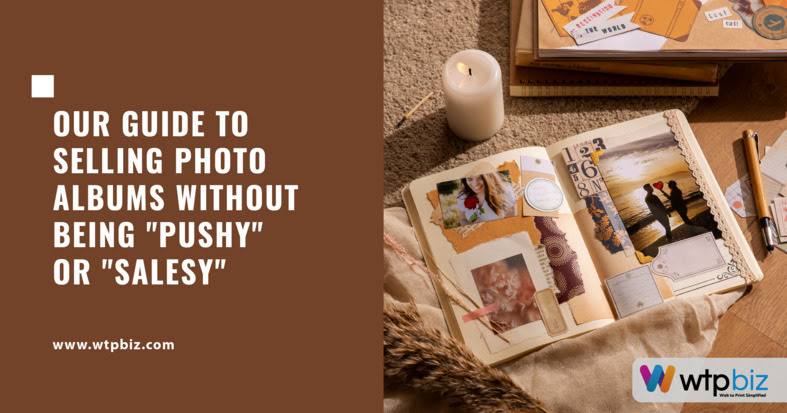
Photo albums have the best margins of almost anything a photographer or print shop sells, and they're also the product most people talk themselves out of pitching. Nobody wants to be the person pushing a $300 upsell onto a couple who just paid for a wedding shoot. The good news: the studios that sell the most albums aren't the ones with the best sales pitch. They're the ones who removed the moment where a "pitch" would even need to happen.
Why the pitch is the wrong place to focus
The traditional album sale goes: shoot happens, photographer picks favorites, client sits through a design consultation, photographer proposes a layout, client approves or requests changes, repeat. Every step in that chain is a place the sale can stall — and it puts you in the position of selling a product the client hasn't seen yet.
The alternative is to let the client see and shape the album themselves, early, with low friction. That's a workflow change, not a script change.
Give clients something to react to, not decide on cold
Instead of describing an album in a sales call, send a working draft. With a browser-based tool like WTPBiz's photobook designer, you can drop your top picks into a wedding or travel template and send the client a link to their own draft, pre-populated, editable, no software to install. They're not approving a concept — they're reacting to something that already looks like their finished album, and rearranging photos themselves rather than waiting on revisions from you.
Use draft saving to remove the "decide right now" pressure
A lot of album sales don't die from a "no" — they die from a "let me think about it" that never comes back. Draft saving fixes the mechanics of that: the client's in-progress album stays exactly as they left it, so following up later means "here's where you left off," not "let's start over." That single feature is what turns a stalled conversation into a resumed one.
Turn one client into a group decision
Family and baby albums, in particular, sell better as a group project than a solo purchase. A collaborative editor — where you invite the couple, or grandparents, or the whole wedding party to contribute photos and edit a shared draft — does two things a single-user tool can't: it gets more people invested in the final product before checkout, and it naturally surfaces upsells (more pages, a second copy, a parent edition) because more than one person is looking at it.
Remove the objection before it's said out loud
The unspoken worry behind most album hesitation is "will this actually look good printed, and is it worth the price?" Two things answer that without you having to say anything:
Live pricing as they design. When page count, paper, and cover options update the price in real time, there's no sticker shock at the end and no separate quote step. The client prices their own album as they build it.
Low-resolution warnings during editing. If a photo's too small to print well at the size they've chosen, they see that immediately and can swap it — instead of hesitating over the album because they're not sure it'll hold up in print.
Both remove a reason to hesitate before it ever gets voiced as an objection.
A simple sequence that works without a sales call
Within a few days of the shoot, build a draft album from your top 20-30 picks in a template that matches the occasion — wedding, baby milestones, travel.
Send the client a direct link to their own editable draft, not a gallery, not a quote. Something they can immediately open and change.
For weddings and family albums, add a note inviting them to share the link with whoever else should contribute photos.
Follow up once, a week later, referencing exactly where they left their draft. Not "did you decide," but "still there whenever you're ready."
None of this requires a sales script. It requires giving the client something concrete to react to, letting them shape it themselves, and making the price and print quality visible before they have to ask.
Selling into a specific niche, like baby and family photos? See our guide on building a baby and family photobook business.
Looking for a low-cost way to source content for these albums? See our guide on turning Instagram photos into a photobook.
Photobook Printing

